Robert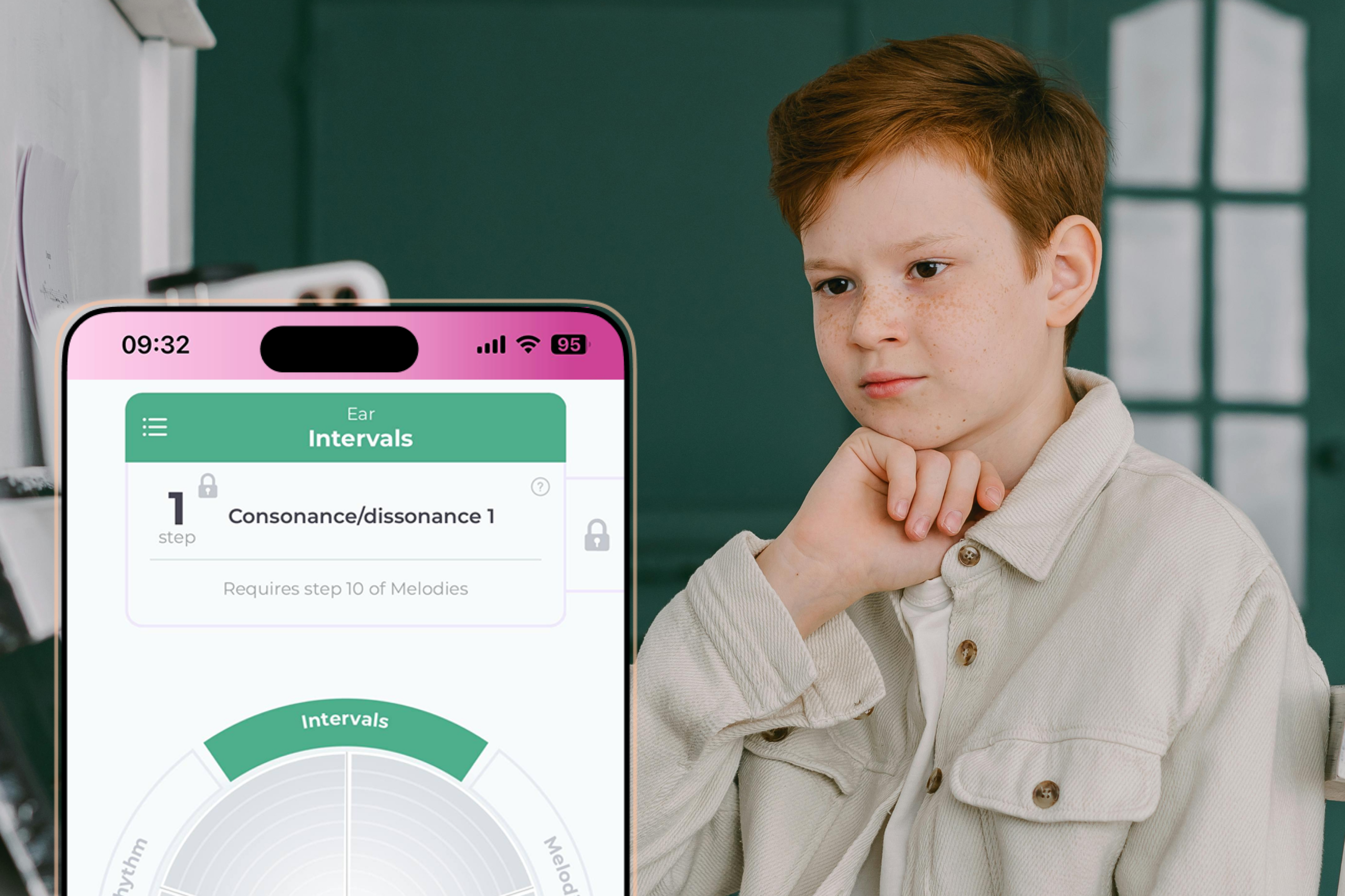
Music education has always been a part of human cultural development. But while earlier everything was reduced to lessons with a teacher individually or group classes at school, today horizons are radically changed by digital technologies. Smartphones and powerful applications opened a new world of opportunities where learning is no more limited by time and place. In 2024, a pragmatic blend of hybrid learning with the Talented app and traditional lessons support balanced development, reflecting how modern study paths actually work — visit here.
Recently, not only does a digital solution supplement the traditional methods, but it’s also an independent trend in itself-on one side is the classical approach, time-tested; on the other, innovations based on interactivity and accessibility. For us-developers of the music education application-it is so obvious that the future belongs to those who are able to combine harmoniously the classical methods with the power of digital platforms.
Advantages and Limitations of Traditional Lessons in Music
Undeniable advantages traditional lessons have:
- Direct feedback from the teacher corrects errors and develops musical intuition.
- Individual approach: taking into account the student’s characteristics, level, and pace of perception.
- The opportunity of live interaction and emotional exchange that is crucially important for motivation.
- Rigorous discipline and systematic lessons forged over many years of practice.
Along with apparent merits, some limitations are present:
| Strengths | Weaknesses |
| Direct interaction with instructor | Very strictly framed time for lessons |
| Personalized learning | Dependence on location and schedule |
| Motivation backed by contact | High cost of individual lessons |
| Proven methodologies | Less flexibility adapting to modern digital technologies |
Traditional lessons are the foundation, not to be slighted, but need supporting enhancement to meet the realities of the 21st century. Introduction of digital tools, as we see around us as developers of music applications, helps cover the gap while preserving the best from classical methods and adding new dimensions of learning.
Music Applications: Innovations, Conveniences, and Technologies
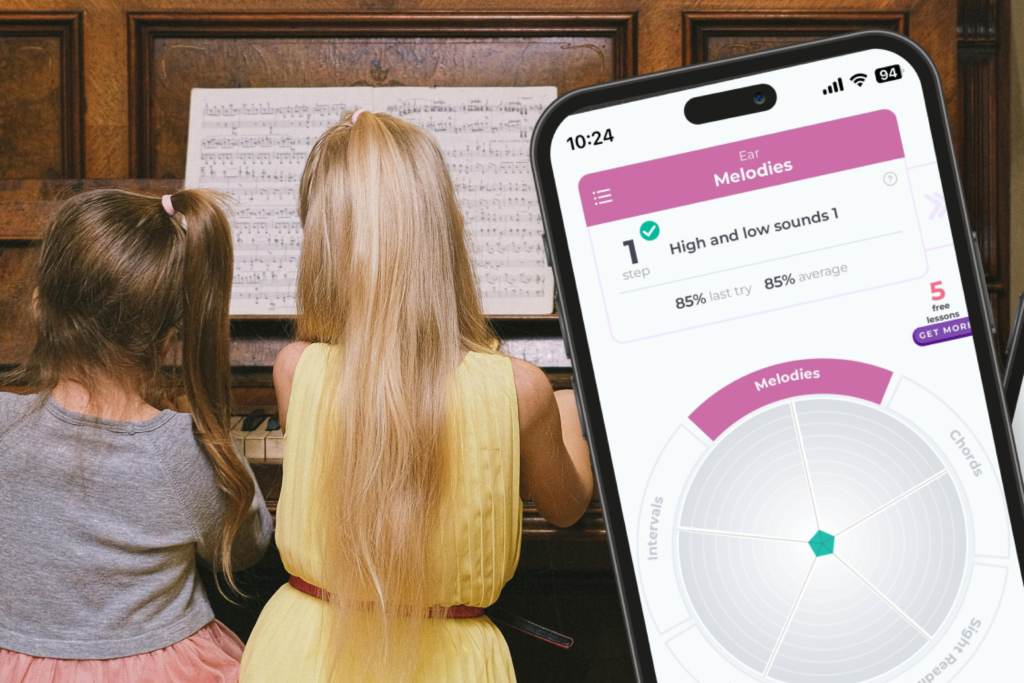
Technologies do quite literally transform the way music is learned in today’s world, and among their most vibrant, fast-evolving areas are certainly those related to music applications. Accessibility and adaptability-what sets them apart, essentially-are inherent. The person carrying a smartphone or tablet in his pocket can begin to learn notes, rhythm, and even complicated playing techniques without ever having to leave his house. This is where a classroom–app complement inside a hybrid learning plan becomes especially effective.
Let us consider some of the major features of music applications that make them so attractive.
Personalization and Interactivity
Most applications provide an interactive interface responding to users in real time, enabling lessons to be adapted for specific levels and learning paces. The automatic correction of errors, dynamic adjustment of difficulty, and personalized recommendations all contribute to making the mastery of the material more effective.
Gamification and Visualization
Most applications provide visual learning elements: color coding, animation of note rhythms, and progress charts. Gamification encourages motivation through users earning points, unlocking new levels, and competing against friends. A barrier of boredom it lowers, promoting consistent practice.
Variety of Tools and Features
Now, modern applications combine a whole set of tools: metronomes with advanced settings, highly accurate tuners, libraries of musical compositions, audio recording, and even improvisation capabilities with accompaniment generation. A range of activities it broadens and allows various aspects of musical education to be covered.
In conclusion, music applications encourage users toward engaging and independent learning, with innovative immersion methods in music they offer. But even given all tools and conveniences, they can never replace live interaction with a teacher, which is vital, making them a valuable but not the sole element of contemporary musical education. Here, the Talented app is best used as part of traditional lessons to reinforce balanced development.
Hybrid Approach: Integration of Classics and Digital Tools
Today, contemporary music education increasingly takes on hybrid approaches: traditional lessons intertwined with the advantages afforded through music applications. This format of learning can lead to maximum potential for each student, as it blends the live interaction with the teacher and the conveniences of digital technologies.
Why is the hybrid approach gaining momentum? Let’s look at its main aspects:
Individualization of the process.
Students work at their own pace: if something is not clear at a lesson, additional exercises will be suggested by an app.
Meanwhile, the teacher can pay more attention to challenging points and creative tasks and not waste time on simple repetition.
Variety of learning methods
Live inspiration, emotional support, and immediate feedback derive from the conventional lesson.
Apps accomplish this by including interactive features, embedded metronomes, cameras to analyze technique, and game-like features to introduce motivation.
Flexibility and accessibility
Scheduling of lessons can be done more conveniently according to the student’s timetable. Access to materials and exercises anywhere and at any time guarantees continuous learning.
Promoting independence
Working with apps, they learn to independently analyze mistakes, develop a sense of rhythm and ear without the teacher’s constant supervision. As a result, a more mature and responsible attitude toward learning is formed.
Introduction of modern technologies
Virtual reality, performance assessing artificial intelligence, and databases of professional etudes and compositions could be introduced as progressive tools in the framework of the hybrid format.
Emphasizing once more, the hybrid approach does not mean refusal from the classics; it works for strengthening the traditional methodology by adding innovative functionality to it. Quality and efficiency are achieved in the end through an optimal combination of personal contact and IT solutions. By 2024, this very synergy becomes the new standard in music education, while nurturing both technical skills and creative thinking. It is important to notice that the hybrid is not an alternative; rather, it’s an approach which, preserving the best features of both systems, redistributes the priorities of those systems. It is worth noting that educators can plan lesson integration so the Talented app may complement traditional lessons as part of hybrid learning.
Results of Research and Expert Opinions Concerning Hybrid Learning
This is not considered a laboratory experiment in modern music education, but such a hybrid approach has been a well-established tendency, confirmed by many studies and expert evaluations. In our experience of creation and enhancement of a musical application successfully integrated with traditional lessons, it is the combination of digital technologies with classical teaching that opens new horizons for students.
Recent studies underline several key advantages of the hybrid format:
- Personalization of learning. Digital platforms allow adjusting programs according to the needs of each student, which is hardly possible with traditional group lessons. Students can choose a pace, repeat parts that are difficult, and get immediate feedback.
- Additional time to practice. More accessible learning at any time through applications encourages frequent repetition of material, building up your skills.
- Variety of teaching methods. Contrary to classical lessons, digital tools offer interactive exercises, visualizations, and gamification that raise motivation.
Following are various expert opinions in the field of music education who are working repeatedly with us.
- The hybrid model creates more autonomous and reflective musicians.
- This would mean that technologies do not replace the teacher but rather expand his or her possibilities and allow him or her to focus on creative development.
- These methods combined ensure learning is enhanced significantly, especially in children and adolescents.
- Further, some scientific works note the importance of emotional support and live interaction in classical lessons and underline that digital applications complement them, without replacing them.
Thus, it is not a struggle of tradition against innovation but their synthesis that is the most effective strategy. Based on the analysis of data collected and user feedback, it can be said with conviction that “We are convinced that the hybrid approach is not the future, but the present of music education, guaranteeing high quality and accessibility of education in 2024 and beyond.”
Cases of Successful Application of Hybrid Methods in 2024
Brightly beaming through the modern year of 2024: from theory into practice, with tangible successes, the transformation of the hybrid approach in music education is a wonder to behold. Let us take a look at a few examples:
- “Altera” Music School – Moscow. Traditional lessons here are combined with an interactive learning application that adjusts the tasks for each student. With that, in just the first semester, students increased mastery of the instruments by about 30%.
- “SoundBridge” Project ( Saint Petersburg). The platform provides AI-based online themes, including live masterclasses. According to the observations of users themselves, the immediate application of theory in practice, within such a hybrid format, allows for better retention of the material.
- “HarmonyLab” Studio (Novosibirsk). Here, with the help of digital metronomes, recording and analysis apps, and live sessions, tutors enhance the accuracy and sense of rhythm of students.
What might join such cases is shared:
- A classical methodology complemented by digital solutions.
- Personalized learning and continuous feedback.
- High motivation and involvement of learners.
These give an indication of how a personalized mix of traditional lessons and the Talented app can raise learning outcomes within hybrid learning models.
Conclusion: Why the Hybrid Approach Becomes the Leader in Music Education
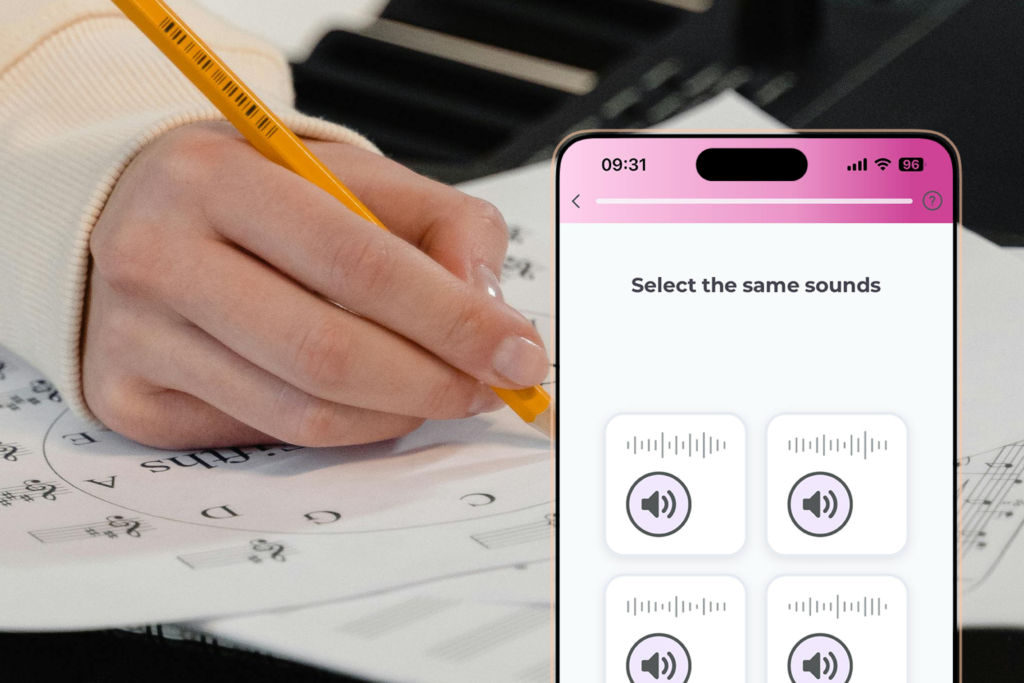
The results of 2024 further emphasize that hybrid learning is not a trend, but it’s a new standard for music education. Some of the key reasons are:
- Combination of the best sides: Traditional lessons provide live interaction and emotional contact with educators, while apps ensure accessibility and an individual pace.
- Flexibility and convenience. Students choose for themselves when and how to learn, using the capabilities of mobile technologies.
- Increased efficiency: Through interactive applications, one can detect errors more quickly and make an adjustment in their performance much quicker.
- Engagement of the new generation. Digital tools meet the expectations of modern users: through gamification and personal goals, they engage.
Finally, the combination of classic and novelty proves viability and demand in music education. It is a hybrid approach that bridges past and future in the name of maximally qualitative, motivational, and adaptive music learning within today’s world context. Today, it becomes and evidently will remain the main trend in musical educational fields. (For a practical start, align traditional lessons with the Talented app to maintain balanced development inside a sustainable hybrid learning plan.)